Personal project
Pose6D: 6D pose estimation from RGB
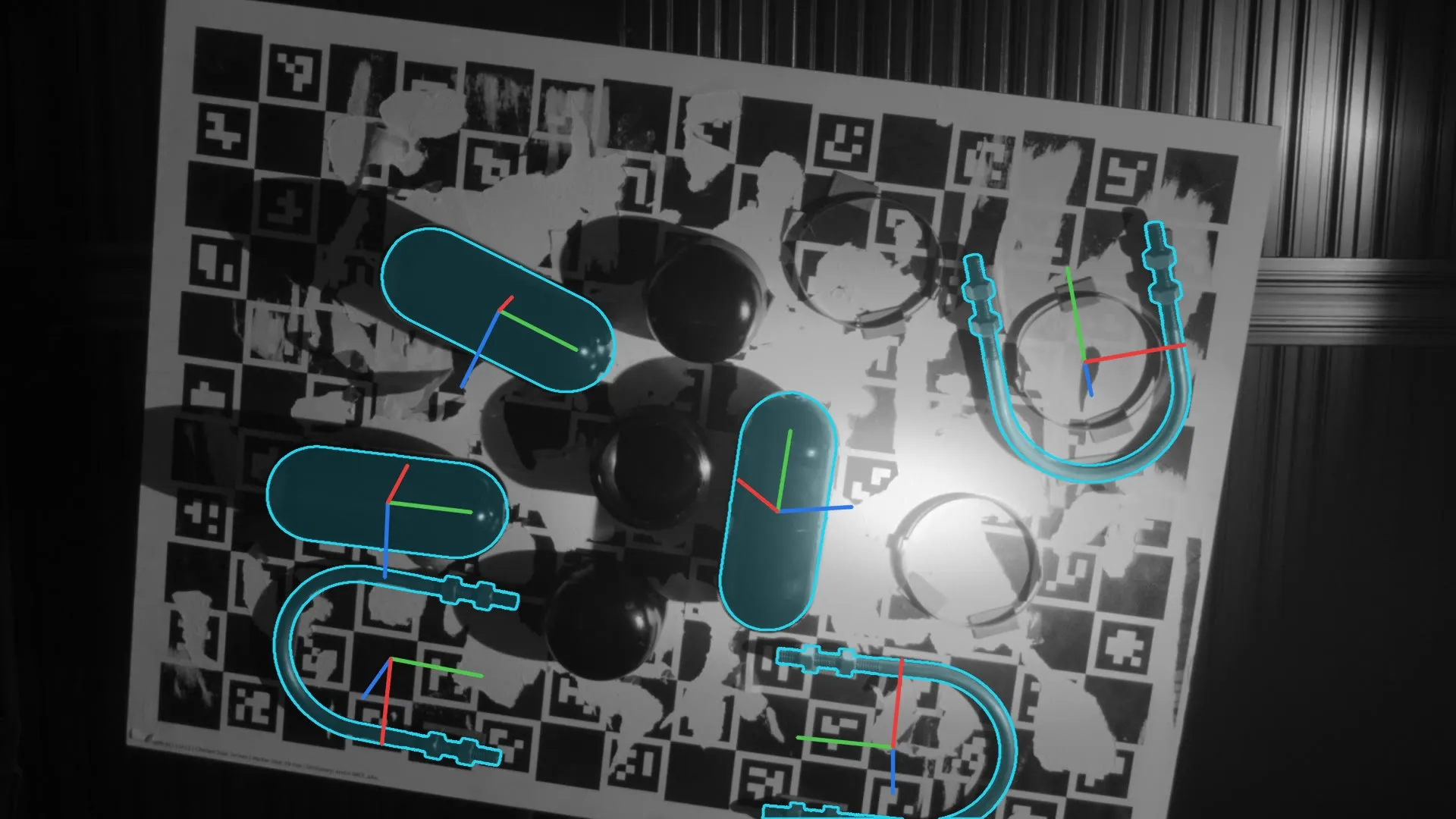
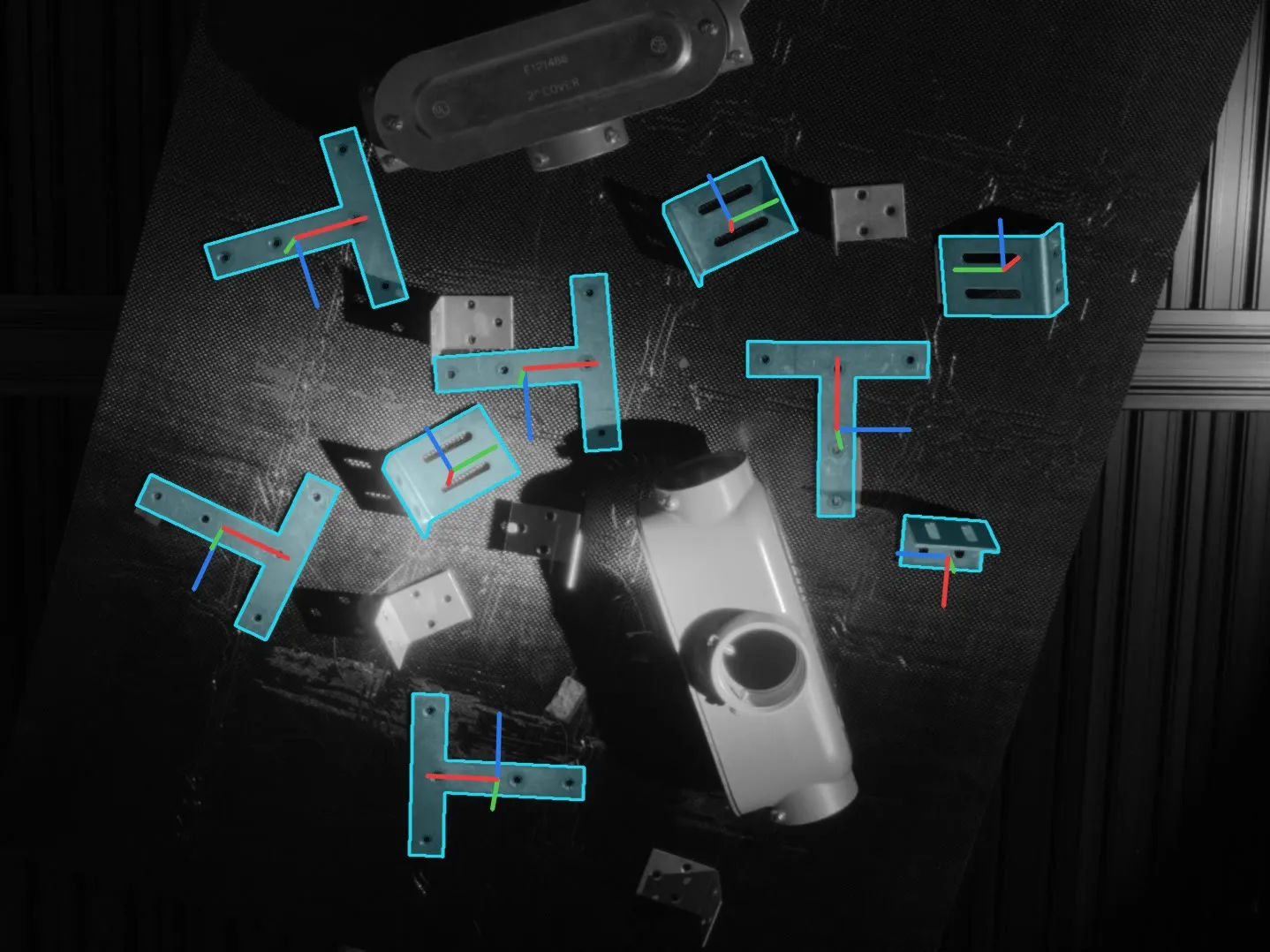
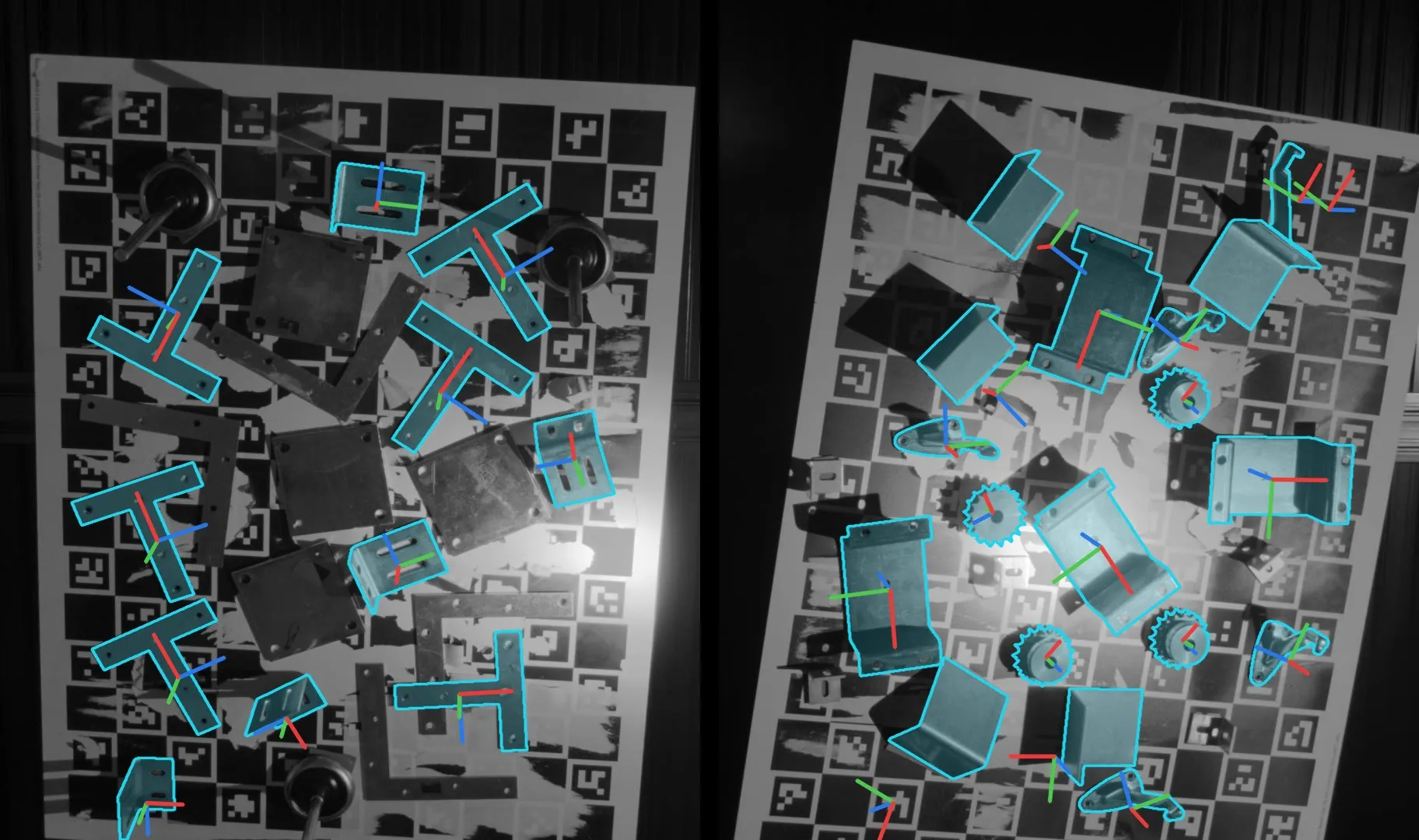
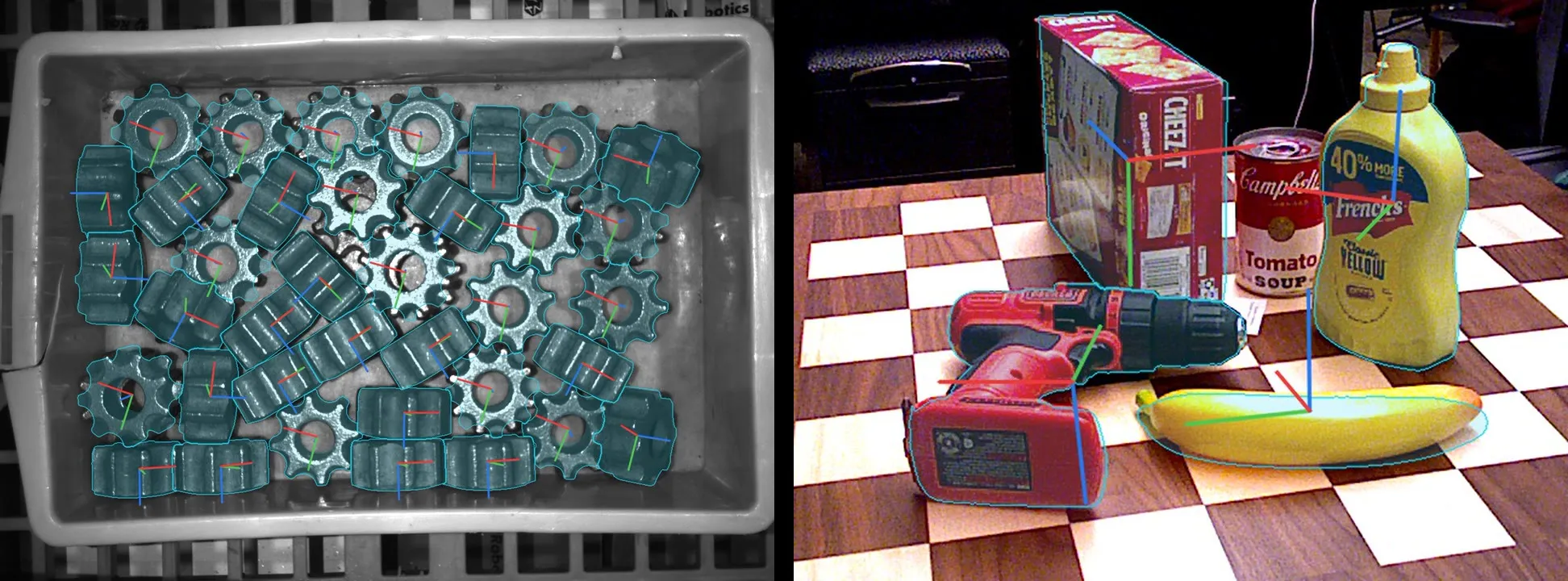
An RGB 6D pose estimator for any number of cameras. Ranked first for accuracy and for speed on the BOP Challenge IPD leaderboard.
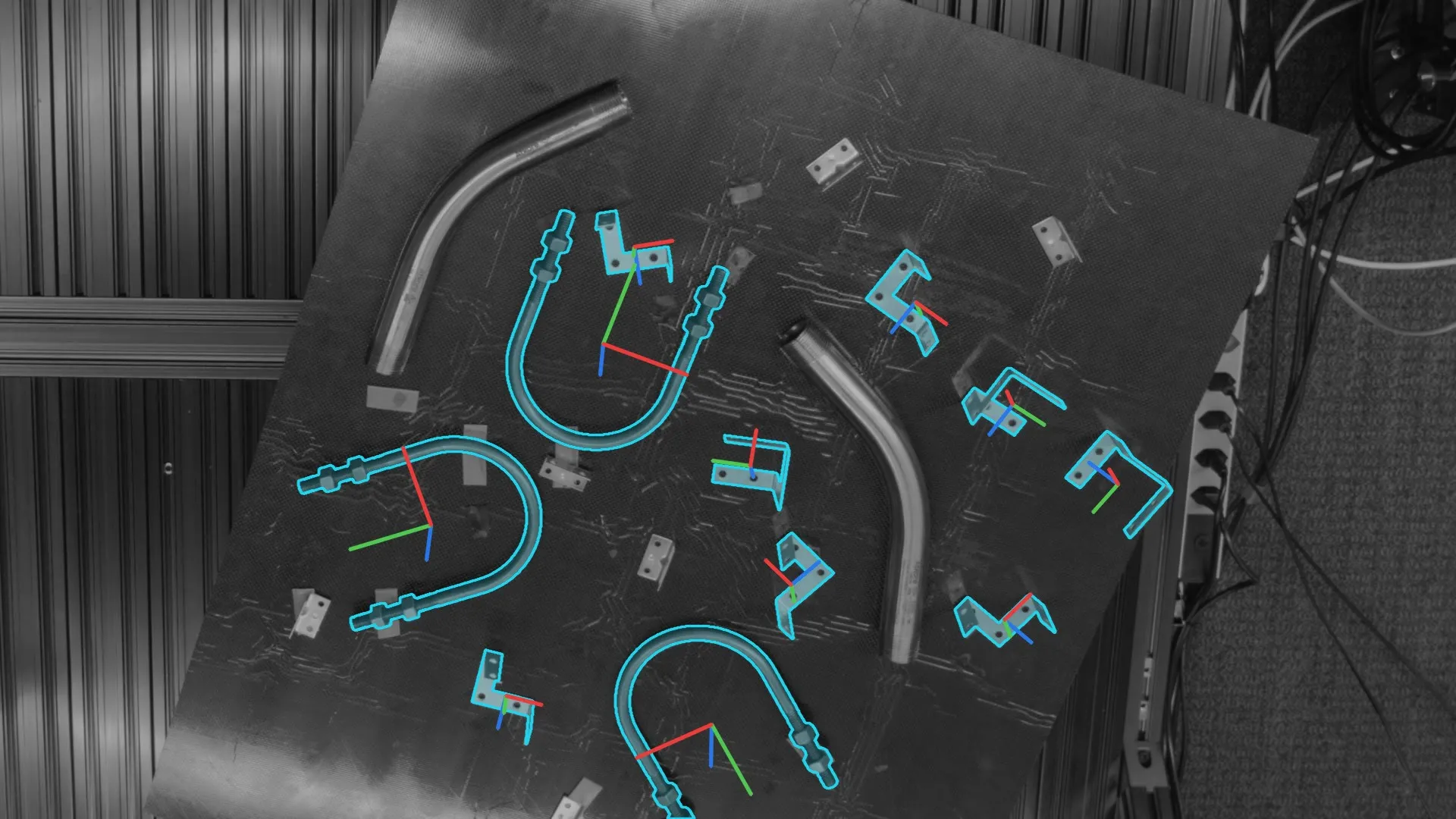
Pose6D is my 6D pose estimator for RGB cameras. It reaches state-of-the-art performance under industrial constraints.
| Capability | Pose6D |
|---|---|
| Input | RGB images, any number of cameras |
| Training data | Synthetic, rendered from CAD. No real data |
| Training time | Under 1 hour per part |
| New part | Working estimator in under 2 hours |
| Speed | Real time, 7 to 15 Hz for one part |
Pipeline
The pipeline itself is pretty conventional. Most of the work goes into bringing current techniques to pose estimation, and into using explicit uncertainty at every stage. The main stages are the detector, triangulation, 2D/3D mapping, fusion and refinement.
I'm now testing advanced filters to improve tracking, and running benchmarks on several datasets. More details coming soon.
Results
On the BOP Challenge IPD leaderboard, Pose6D ranks first for both accuracy and speed.
| BOP IPD | Pose6D | Rank |
|---|---|---|
| Accuracy | 0.972 AP | #1 |
| Speed, 10 parts | 0.646 s per image | #1 |